
Yes—therapy can help with autistic burnout when the work includes understanding overload and making daily life less demanding. Rest, sensory accommodations, boundaries, and practical support belong within that work, rather than being separate from it. The aim is not to help you mask more successfully or return to productivity before your body has the support it needs.
TL;DR
Can therapy help with autistic burnout? Yes, when support addresses overload rather than pushing you to perform.
Autistic burnout support should include rest, sensory needs, boundaries, and realistic changes to daily demands.
Awaken Therapy offers psychotherapy support for high-masking autistic women, teens, and adults.
Therapy does not replace medical assessment when exhaustion or changes in functioning need further investigation.
Can therapy help with autistic burnout?
Therapy can support autistic burnout recovery, but therapy alone cannot remove every source of overload. A helpful therapeutic relationship gives you space to understand what has become unsustainable and decide what needs to change. The work should respect your capacity, not become another place where you must appear capable.
Autistic burnout is described in research and autistic accounts as profound exhaustion, reduced capacity, and reduced tolerance for sensory input associated with sustained demands and insufficient support. These experiences deserve attention, but they do not establish a diagnosis or explain every cause of fatigue. A clinician should remain open to overlapping mental and physical health concerns.
Awaken Therapy Center approaches burnout through integrative psychotherapy for high-masking autistic women, teens, and adults. Exploring emotional strain, making room for rest, addressing sensory needs, and identifying changes to daily demands are connected parts of the work—not competing treatment options.
Supporting burnout means looking at the life you are trying to function within, not only what happens during a session. That includes discussing whether medical assessment or medication support from an appropriate healthcare professional belongs in your care. Psychotherapy does not replace medical evaluation or prescribing, but those conversations do not need to be disconnected from your therapy.
Why this matters
When you have spent years appearing composed, other people might not recognize how much effort ordinary activities require. You might finish a conversation successfully and then struggle to prepare food, answer messages, or tolerate sound. Outward performance does not reveal the full cost.
If you are seeking help in 2026, you do not need to arrive with a polished explanation. Describing what has changed in your daily life gives a therapist somewhere concrete to begin. Being articulate in a session does not mean you have the same capacity everywhere else.
The aim is not to help you endure the same overload more quietly. It is to understand what support, boundaries, or environmental changes you need.
What can therapy help you work on?
Therapy should begin with the difficulties you want help with, rather than a preset expectation that you should become more social, more productive, or less visibly autistic. You retain a say in the goals and pace.
Recognizing overload
You can explore which situations leave you depleted and which signs appear before you reach your limit. Those signs might involve sensory discomfort, difficulty making decisions, irritability, or a growing need to withdraw. None is specific enough to diagnose autistic burnout by itself.
A therapist can help you describe patterns without turning self-observation into constant monitoring. If tracking your experiences feels like another demand, a conversation about a recent difficult day is enough to start.
Understanding masking
Masking can involve suppressing movements, rehearsing interactions, or hiding confusion and distress to meet social expectations. Therapy can provide space to examine the effort involved and the reasons you use these strategies.
Reducing masking is not an instruction to disclose your identity everywhere. Your safety, privacy, relationships, and employment context matter. You decide where a change feels possible and where protection remains necessary.
Setting boundaries
You might know that a commitment is too much and still feel unable to decline it. Therapy can help you explore guilt, fear of disappointing others, and practical ways to communicate limits.
A boundary does not need an elaborate explanation. You can work on language that fits your situation, including requesting written information or postponing a nonessential conversation. Whether others respect that boundary is a separate issue—not a measure of how well you expressed it.
Making room for grief
Reduced capacity can affect your sense of identity, especially if others have valued you for being reliable, accommodating, or highly productive. Therapy can make room for grief and frustration without turning them into evidence that you are failing.
You do not have to feel positive about your circumstances to deserve support. Nor must every session end with a task.
Why therapy's usefulness varies
The label on a therapy approach does not tell you everything about the experience. Fit depends on what happens in the room, how goals are chosen, and whether practical barriers receive attention.
Therapist understanding: The clinician needs to consider masking and sensory needs rather than equating eye contact or fluent speech with low distress.
Current capacity: Conversation, travel, decision-making, and between-session tasks all require effort. The work needs to account for that effort.
Environmental demands: Therapy has limits when your workplace, school, caregiving responsibilities, or living situation remains overwhelming.
Safety and choice: Reducing masking or asking for accommodations involves personal decisions. A therapist should not pressure you into disclosure.
Overlapping concerns: Sleep difficulties, depression, anxiety, medication effects, and physical health problems deserve appropriate consideration rather than automatic attribution to burnout.
Access to support: Practical help and the ability to change commitments affect which recommendations are usable.
These factors are not a checklist you must resolve before seeking help. They are reasons to expect an individualized conversation rather than a standard recovery assignment.
How can you tell whether therapy is a good fit?
If you are comparing therapists in 2026, ask about their approach before assuming that a general statement about autism experience answers your questions. You are allowed to ask how the work would change when your capacity is low.
Start with 3 questions:
Understanding: How do you approach autistic burnout and high masking without assuming every difficulty has the same cause?
Session demands: How would we adjust sessions or between-session tasks if therapy itself became exhausting?
Goals: How would we decide whether a goal supports my needs rather than other people's expectations?
Listen for whether the therapist describes collaboration, acknowledges limits, and leaves room for uncertainty. A useful answer does not require a promise of improvement. It requires a clear explanation of how your experience will inform the work.
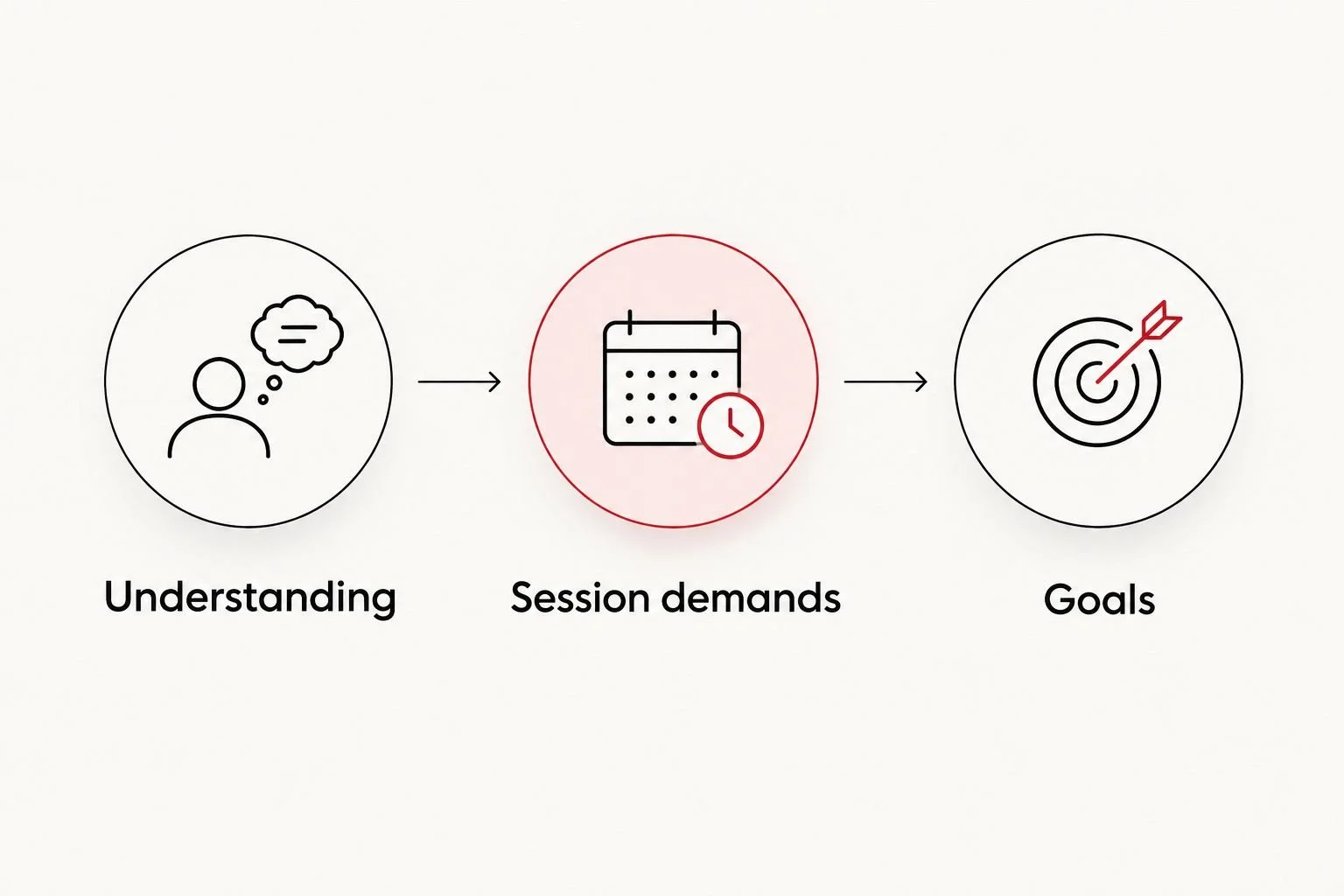
Ask how therapy will adapt to your capacity, not only which approach the therapist uses.
Awaken Therapy is an option for high-masking autistic women, teens, and adults seeking integrative psychotherapy. That service description is a starting point for discussing fit, not a guarantee that a particular therapeutic relationship will meet your needs.
You don’t need to have it figured out
You needn’t know what drains you before starting therapy. At Awaken Therapy, we explore overload together, at your pace—no answers required.
Can therapy make autistic burnout feel worse?
Therapy can add strain when sessions demand more processing, social performance, or homework than you can manage. Difficult emotions during therapy do not automatically mean the work is harmful, but repeated exhaustion deserves discussion.
Bring attention to concrete effects: needing extensive recovery after sessions, feeling pressured to mask, or leaving with tasks you cannot realistically complete. Ask to review the pace, goals, and communication format. If your concerns are dismissed, you can reconsider the fit or seek another professional perspective.
More effort is not always the appropriate therapeutic response. You should be able to question an intervention without having that question treated as a failure to cooperate.
Do you need an autism diagnosis before asking for help?
You can ask for help with exhaustion, sensory distress, or difficulty managing daily demands without already having an autism diagnosis. A therapist can discuss those experiences while keeping diagnostic questions open.
Screening and a diagnostic evaluation are not interchangeable. Screening identifies whether further assessment deserves consideration; it does not by itself establish a diagnosis. If diagnostic clarity matters to you in 2026, ask what the process includes and who is qualified to provide the evaluation you need.
You also retain the choice to focus first on immediate support. Exploring autism does not require you to settle every question about identity before discussing what is difficult now.
What non-medication supports can help with autistic burnout?
An integrative approach makes room for your body, environment, relationships, and emotional experience. The following are ways to reduce strain, not a recovery checklist or a promise that lifestyle changes will resolve burnout. Start with what feels accessible; needing help to make a change is not a failure.
Reduce demands before adding tasks. Postpone nonessential commitments, simplify routines, or ask someone to help with groceries, meals, or household responsibilities. Rest should not depend on finishing everything first.
Make rest less stimulating. Protect time without conversation, notifications, or pressure to be productive. Rest might mean sleep, quiet time, or a familiar activity that does not require you to perform.
Adjust sensory input. Explore softer lighting, comfortable clothing, quieter spaces, or noise-reducing headphones when safe. Choose what feels regulating to you rather than assuming everyone needs the same environment.
Support basic physical needs. Make food, water, and opportunities for sleep easier to access. Persistent sleep difficulties or trouble meeting these needs deserve professional attention, not blame.
Allow comfortable movement and stimming. Rocking, stretching, walking, or other preferred movements can be options if they feel supportive. Exercise should not become another demand to push through exhaustion.
Make room for interests and safe connection. Familiar interests, comfort objects, or time with people who accept your communication style can offer space without social performance. Solitude is also a valid need.
Practice boundaries and accommodations. Ask for written instructions, fewer meetings, recovery time between commitments, or another communication format. Explore reducing masking only where it feels safe.
These supports can accompany medication when medication is appropriate. They are not a test you must pass before receiving medical care, and they should not be used to delay treatment for a co-occurring condition.
When might medication be beneficial?
Medication can be beneficial when a qualified prescriber identifies a co-occurring condition, such as depression, anxiety, ADHD, or a sleep disorder, for which medication is appropriate. Treating that condition can be part of burnout care, but medication does not remove sensory overload, unsustainable demands, or the need for rest.
A useful conversation is: what specifically would this medication treat, what benefit would make it worthwhile, and what non-medication supports might help instead of—or alongside—it? You do not need to assume medication is necessary simply because you are exhausted. You also do not need to avoid medication that could help because you prefer an integrative approach.
What if you are sensitive to medication?
Some clients describe feeling sensitive to medications, including everyday over-the-counter medicines such as Tylenol (acetaminophen). Those experiences deserve to be heard and discussed with a prescriber or pharmacist. They are individual reports, not evidence that all neurodivergent people react the same way or that acetaminophen is inherently unsuitable for autistic people.
NICE's adult autism guidance advises clinicians to consider possible greater sensitivity to side effects and unusual medication responses. That guidance supports individualized prescribing and monitoring—not a blanket rule to avoid medication. Sensory sensitivity and a medication reaction are not interchangeable, and a clinician can help clarify what you experienced.
Tell your prescriber what you took, what happened, and whether you take other medicines or supplements. Discuss expected benefits, possible side effects, and how treatment would be reviewed. Do not start, stop, or change prescribed medication without speaking with your prescriber; non-medication support is not a substitute for necessary medical treatment.
When should you seek additional care?
Do not assume that every new symptom is autistic burnout. Persistent exhaustion, changes in sleep or appetite, pain, or a marked change in daily functioning warrant discussion with an appropriate healthcare professional.
Therapy can sit alongside that assessment. It should not delay care for symptoms that require medical attention, and it cannot rule out a physical cause through conversation alone.
If you feel unable to keep yourself safe or face an immediate danger, seek emergency help. A routine therapy appointment is not a substitute for urgent care.
FAQ
Can therapy help with autistic burnout if I still have to work?
Therapy can help you explore boundaries, accommodations, and the emotional impact of work while you remain employed. It cannot remove job demands by itself, so goals need to reflect what you can realistically change.
What's the best therapy for autistic burnout?
There is no single therapy approach that can be named best for every person experiencing autistic burnout. Look for a clinician who understands masking, respects sensory and communication needs, and collaborates on goals without promising recovery.
How long does therapy take to help with autistic burnout?
There is no fixed timeline that tells you when therapy will help with autistic burnout. Discuss what useful support would look like for you and review whether sessions are adding manageable support or additional strain.
Is autistic burnout the same as depression?
Autistic burnout and depression are not interchangeable, although exhaustion, withdrawal, and reduced functioning can overlap. A qualified clinician can explore your experiences without assuming that one explanation rules out the other.
Should I stop masking to recover from autistic burnout?
You do not need to stop masking everywhere to seek support for autistic burnout. Decisions about disclosure and changing social strategies should account for your safety, privacy, and circumstances.
Can teens get help with autistic burnout?
Teens can seek professional support for exhaustion, sensory overload, and difficulty coping with daily demands. Conversations should respect the teen's perspective and consider school, home expectations, and developmentally appropriate involvement from caregivers.
Does Awaken Therapy offer support for high-masking autistic adults?
Awaken Therapy offers integrative psychotherapy services, including support for high-masking autistic women, teens, and adults in the SF East Bay and California. Ask how the approach would address your specific concerns and communication needs.
One last thing
If you take one question into a therapy conversation in 2026, make it this: what can become less demanding? That question leaves room for rest, practical support, different expectations, and therapy that does not become another performance.
You do not have to prove how exhausted you are by reaching a crisis. Describing the gap between what others see and what daily life costs you is a valid place to begin.