
To get a superbill for out-of-network therapy, ask your therapist or their billing office for an itemized document you can submit to your health insurer for possible reimbursement. Before submitting it, confirm your plan’s out-of-network mental health benefits, required claim documents, and filing deadline; a superbill does not guarantee payment.
TL;DR
How do I get a superbill for out-of-network therapy? Ask your therapist or billing office directly.
A superbill documents care; your health insurer decides whether the claim qualifies for reimbursement.
Check your plan’s requirements before submitting sensitive information, including a diagnosis.
Keep the original superbill and your submission confirmation so you can track the claim.
Why this matters
You do not need to understand insurance billing before asking for help. If paperwork feels overwhelming, particularly alongside ADHD, masking, or sensory overload, separating the therapist’s task from the insurer’s task gives you a clearer starting point.
Awaken Therapy offers psychotherapy and autism screening. Whether you are considering care there or elsewhere, confirm a practice’s superbill process directly rather than assuming that offering therapy means offering insurance billing support.
Your therapist supplies the clinical billing information; your insurer determines whether your plan covers the claim. Those are separate decisions. For care received in 2026, use the benefits and submission instructions that apply to those dates of service.
How do I get a superbill for out-of-network therapy?
Use these 5 steps to request the document, check it, and submit it without treating the superbill itself as a promise of reimbursement.
1. Ask your therapist who prepares superbills
Contact your therapist or the person handling billing. Ask whether the practice issues superbills, how you request one, and how it delivers documents containing health information.
You can keep the request brief:
Please let me know whether you can provide a superbill for my therapy sessions. I would also appreciate instructions for requesting it and receiving it securely.
If you have already attended sessions, identify the dates you need. Ask whether the practice provides separate documents for each visit or groups visits together; do not assume its routine matches your insurer’s requirements.
2. Check your out-of-network mental health benefits
Ask your insurer whether your plan includes out-of-network outpatient psychotherapy benefits. Then ask whether the particular provider, service, and type of visit are eligible under those benefits.
Keep these 4 questions beside you during the call or secure-message exchange:
Does my plan cover out-of-network outpatient psychotherapy with this provider type?
Does a deductible or another member responsibility apply before reimbursement?
What documents and claim form must I submit?
What is the filing deadline for these dates of service?
Also ask about authorization requirements and any rules for telehealth. A plan’s general out-of-network benefit does not establish that every psychotherapy claim qualifies.
3. Review the superbill before submitting it
Compare the document with your insurer’s checklist. Commonly requested information includes your identifying details, the provider’s identifying information, service dates, procedure codes, diagnosis codes, and billing details.
Check your name and dates first. Ask the practice about missing information or an unfamiliar entry rather than editing clinical or billing codes yourself.
A superbill can contain information you have not previously discussed in billing terms. You can ask your therapist what a diagnosis entry means and why it appears on the document before deciding whether to submit it.
4. Follow your insurer’s claim instructions
Your insurer might require a member claim form alongside the superbill. Use its stated submission channel and follow its instructions about signatures, attachments, and proof of payment.
Before uploading anything, check that every page is readable and that the claim identifies the correct member. For a dependent’s care, ask whose information belongs in each field rather than assuming the policyholder and patient fields are interchangeable.
Keep 2 records together: the original superbill and your submission confirmation. Retain any additional forms or correspondence with them so you can answer a follow-up request without reconstructing the submission.
5. Read the insurer’s response
Look for an explanation of benefits or other claim determination. Check the service dates, how the claim was processed, and any explanation for a denial or request for more information.
If the insurer needs corrected provider information, contact the practice. If the issue concerns coverage, eligibility, or plan rules, ask the insurer to explain the decision and the next available step.
A request for missing information is not the same as a final coverage decision. Read the stated reason before deciding whether to resubmit, request a correction, or pursue an appeal.
The responsibilities remain separate throughout: you request and submit the paperwork, the therapist supplies accurate service information, and the insurer reviews the claim.
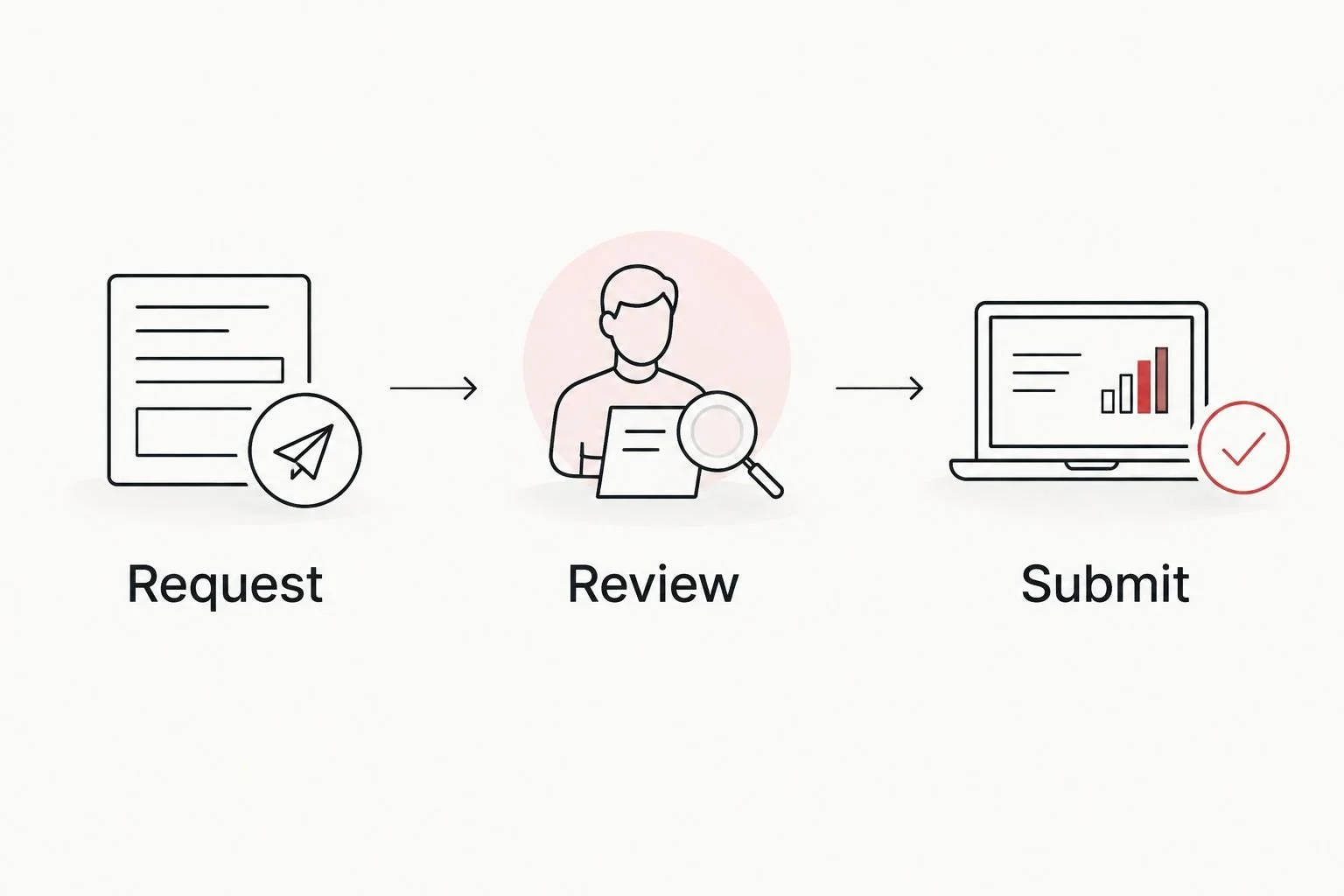
Review the superbill against your insurer’s requirements before submitting it.
Is a superbill the same as a receipt?
A superbill and a receipt serve different purposes, although a practice can combine information in a single document. An insurer’s explanation of benefits is different again: it describes how the insurer processed a claim.
Superbill
Best for: Supporting an out-of-network claim
What it helps establish: Provider, service, diagnosis, and billing information
Limitation: Does not establish coverage or guarantee reimbursement
Payment receipt
Best for: Documenting a payment
What it helps establish: That a payment was recorded
Limitation: Can lack the clinical billing details an insurer requires
Explanation of benefits
Best for: Understanding a processed claim
What it helps establish: How the insurer applied plan rules
Limitation: Is not a substitute for the provider’s original service documentation
A payment confirmation alone might not contain everything needed to process a therapy claim. Ask the insurer what is missing before requesting replacement paperwork from your therapist.
Likewise, an explanation of benefits is not itself a bill. Read it alongside the provider’s billing records if you need to understand an outstanding balance.
Why superbill requirements and reimbursement vary
There is no universal reimbursement outcome attached to a superbill. Your plan’s terms and the details of the claim determine what happens after submission.
For a 2026 claim, check these factors rather than relying on another person’s experience:
Plan benefits: Some plans do not include out-of-network outpatient mental health coverage.
Member responsibility: Deductibles and other cost-sharing rules affect what the plan pays.
Allowed amount: An insurer can calculate benefits using its allowed amount rather than the therapist’s billed amount.
Provider and service eligibility: Coverage depends on the plan’s rules for the provider and the service received.
Submission requirements: Missing documentation, authorization requirements, and filing deadlines can affect claim processing.
Visit details: Telehealth and other service circumstances can require specific information on the claim.
Ask the insurer to explain how these rules apply to your care. A benefit explanation helps you plan, but it is not the same as approval of a submitted claim.
If your coverage changed during 2026, identify the plan covering each service date. Do not assume that your current benefits apply to an earlier session.
What information about my mental health will insurance receive?
A superbill generally includes a diagnosis code and information identifying the service and provider. It is not the same document as a therapist’s session notes, but submitting it still shares health information with your insurer.
Before submitting, ask your therapist what the document contains. You can also ask the insurer whether it requires additional records and how it handles communications about the claim.
This deserves particular attention when you are covered as a dependent. Ask where claim notices and explanations of benefits are sent, who can access them, and what confidential communication options apply to your situation.
You can ask privacy questions before deciding to submit a claim. For teens, questions about consent, access to records, and insurance communications deserve an individual discussion with the clinician and insurer rather than assumptions based on age alone.
If you have felt misunderstood or misdiagnosed, a billing diagnosis can carry emotional weight. Ask for an explanation in ordinary language; you do not need to interpret the code by yourself.
What should I say when I request a superbill?
A short message is enough to start. Send sensitive details only through a communication method the practice recommends for health information.
Hello, I would like to request a superbill for my therapy sessions on the following dates: [list your session dates]. Please let me know how I can receive it securely and whether you need any information from me. My insurer has provided a list of required details that I can share if helpful.
If composing a message feels difficult, reduce it to the first sentence and ask what comes next. You do not have to explain why administrative tasks are hard or disclose a diagnosis to justify asking for clear instructions.
A written response can help you keep track of the process without relying on memory. Ask for the next action in writing if a phone conversation leaves you unsure.
Can I request a superbill after therapy has already started?
You can ask for a superbill after sessions have taken place. Whether the practice can provide the requested documentation, and whether the insurer will accept the claim, are separate questions.
Give the practice the relevant session dates and check the insurer’s filing deadline promptly. For sessions spanning different benefit periods, ask how to organize the submission; a 2026 request does not automatically make every past session eligible.
What if my therapist does not provide superbills?
Ask what itemized documentation the therapist can provide, then ask your insurer whether it meets the claim requirements. Do not assume that a standard receipt will be sufficient.
If required details are unavailable, clarify that before depending on reimbursement for continued care. You can discuss the administrative limitation without treating it as a judgment about the quality of the therapeutic relationship.
Choosing support without making paperwork the whole decision
Awaken Therapy provides integrative psychotherapy for teens and adults, including support for high-masking autistic women in the SF East Bay and California. Its stated services also include autism screening; confirm billing documentation for the specific service you are considering rather than treating screening and psychotherapy as interchangeable claims.
Awaken Therapy serves teens and adults seeking integrative psychotherapy, including high-masking autistic women. Clinical fit and insurance administration remain separate considerations: ask about both before deciding whether a practice meets your needs.
You can ask a prospective therapist how they discuss diagnoses, communicate administrative instructions, and handle questions about billing documents. Those conversations let you assess the process without requiring you to commit to treatment or disclose more than you want to share.
FAQ
Who do I ask for a therapy superbill?
Ask your therapist or the practice’s billing office for a superbill. Your insurer supplies claim instructions, but the provider supplies the information documenting the care.
Does a superbill guarantee that insurance will reimburse me?
No, a superbill does not guarantee reimbursement. Your insurer applies your plan’s coverage, eligibility, documentation, and cost-sharing rules to the submitted claim.
Can I submit a receipt instead of a superbill?
A receipt alone is sufficient only if it meets your insurer’s documentation requirements. Ask the insurer whether it needs additional provider, service, or diagnosis information.
Does a therapy superbill include a diagnosis?
A therapy superbill generally includes a diagnosis code used for insurance billing. Ask your therapist to explain the entry and discuss privacy questions before submitting it.
Can I get a superbill for online therapy?
Ask your online therapist whether the practice provides superbills, then check your plan’s out-of-network telehealth requirements. Receiving care online does not by itself establish claim eligibility.
What do I do if my out-of-network therapy claim is denied?
Read the insurer’s stated reason before taking the next step. Ask whether the issue requires missing information, corrected documentation, or an appeal under your plan’s process.
Does Awaken Therapy provide superbills for psychotherapy or autism screening?
Confirm superbill arrangements directly with Awaken Therapy for the specific service you are considering. Also ask your insurer about coverage and documentation requirements for that service.
One last thing
Ask about the filing deadline before spending time perfecting the paperwork. A complete document and an eligible service still need to meet the insurer’s submission rules.
If you are considering Awaken Therapy, bring your documentation questions alongside your questions about care. For a 2026 claim, write down the service dates, required documents, deadline, and next action in one place. You do not need to solve the entire insurance process at once; start by asking who can provide the superbill.